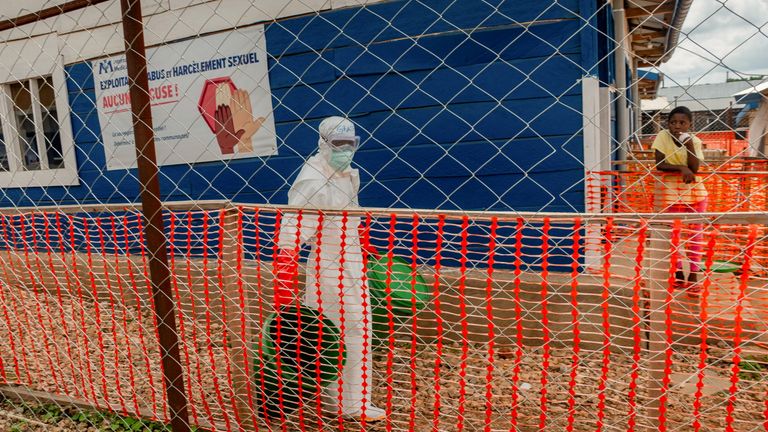
When a British healthcare worker volunteering in the Democratic Republic of Congo contracted Ebola, the announcement immediately sparked a complex debate over medical repatriation, public safety, and national duty. While the primary objective focused on providing the patient with the highest standard of specialized care, the decision to transport an infected individual across continents raised natural questions regarding containment risks and the ethics of treating aid workers away from the epicenter of an outbreak.
The Logistics of Biocontainment
Transporting a patient infected with a high-consequence pathogen is a meticulously planned military and medical operation rather than a routine commercial flight. Specialized transport mechanisms, including dedicated biocontainment units and aircraft managed by defense forces, are engineered specifically to isolate biological threats. Unlike airborne pathogens, Ebola requires direct contact with infectious bodily fluids to transmit, making controlled medical evacuation significantly safer when managed by trained hazmat specialists.
Public health experts have repeatedly emphasized that nations possessing advanced healthcare infrastructure can safely isolate and treat such cases without introducing domestic epidemic risks. As one observer noted regarding the stringent protocols involved, "The RAF has a specialist unit for transporting contaminated people. It’s designed for biological weapon victims." Another participant added context to the mechanics of transmission, pointing out that "Ebola has an incredibly low transmission rate, you basically have to ingest the blood or fresh body fluid of an infected person to catch it so it's relatively safe."
Sorry, something went wrong. Please try your request again.

